


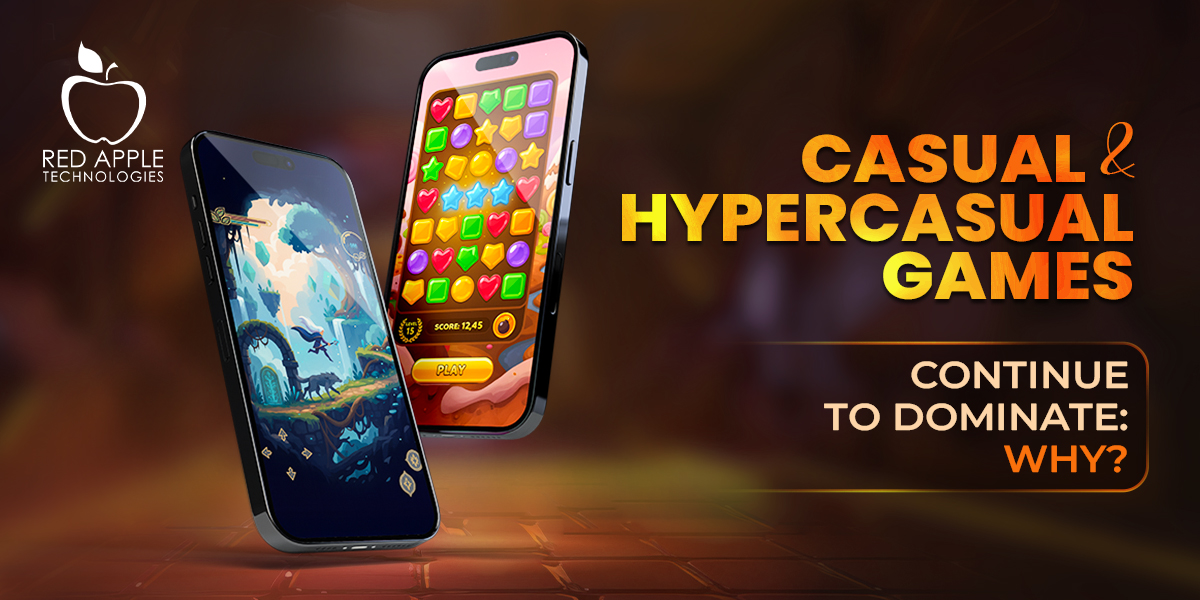
Technology is woven into the fabric of modern life. From the moment we wake up to the time we go to sleep, we rely on some form of digital device, be it a smartwatch tracking our health, a laptop managing our work, or, most significantly, a smartphone connecting everything together. Among these, mobile phones have emerged as the single most transformative piece of technology.
What makes smartphones so central is not just their communication power but their ability to serve as platforms for applications and games. Today’s phones are entertainment hubs, productivity tools, shopping platforms, and even fitness guides. And within this ecosystem, apps and games have grown into one of the most lucrative markets globally.
This transformation has not only reshaped how people spend their time but has also unlocked an enduring investment opportunity. Among all genres, casual games and hypercasual games have become the biggest winners in terms of downloads and monetization efficiency.
The Smartphone Revolution and Gaming’s Role
When personal computers first entered homes, they were hailed as revolutionary. Yet, even they did not achieve the ubiquity and influence that smartphones now enjoy. A primary reason is convenience: smartphones are portable, always connected, and supported by app ecosystems that make them useful for nearly any task.
Games, in particular, are deeply embedded in this ecosystem. Millions of users download and play titles every day — not as hardcore gamers, but as everyday people filling small moments of downtime. This demand has given rise to casual and hypercasual gaming, genres defined by simple mechanics, quick sessions, and massive global reach.
Why Investors Care About Casual and Hypercasual Games
Despite their simplicity, these games have carved out an impressive niche in the $100+ billion mobile gaming market. Investors are attracted for several reasons:
Ubiquitous Reach: These games tap into the broadest possible audience. A person who might never purchase a console or a PC game will happily spend five minutes on a hypercasual title during their commute.
Low Development Costs But High Speed: Studios can build prototypes quickly, often within weeks. If a game resonates, it can scale rapidly; if not, losses are minimal. This lean approach aligns perfectly with investors’ preferences for capital efficiency.
Predictable Monetization: A large share of revenue comes from ads, with in-app purchases and cross-promotions adding additional streams. For investors, that means predictable cash flow and shorter payback cycles.
Smartphone Dependence: Because mobile phones have become indispensable, demand for lightweight entertainment apps remains resilient even during economic downturns.
Data That Tells the Story
Despite volatility in CPI (cost per install) and shifts in user acquisition strategies post-ATT (Apple’s App Tracking Transparency), casual and hypercasual segments remain dominant in mobile gaming. In 2023, hypercasual games accounted for nearly 30% of all mobile game downloads globally, according to industry trackers. Casual puzzle and arcade titles consistently top the Google Play and App Store charts.
This table illustrates the growth of casual and hypercasual titles over the past few years:
| Year | Global Downloads (Billion) | Revenue (USD Billion) | Avg CPI (USD) |
|---|---|---|---|
| 2021 | 13.0 | 7.5 | 0.20 |
| 2022 | 15.6 | 8.9 | 0.22 |
| 2023 | 16.5 | 9.4 | 0.25 |
| 2024 | 17.2 | 9.8 | 0.28 |
Between 2021 and 2024:
Downloads grew by 32% despite market saturation.
Revenue rose by nearly $2.3 billion, albeit at a slower pace, proving sustainable demand.
CPI increased slightly, but margins remain attractive because of fast payback periods.
Revenue Breakdown
The revenue model for these games is straightforward but powerful. The monetization of hypercasual games differs significantly from premium or mid-core tiles. They lean heavily on ad revenue, while casual games increasingly mix in-app purchases with advertising to stabilize ARPU.

This mix is especially attractive to investors because it creates diversified yet predictable income streams. The reliance on advertising means hypercasual titles can scale quickly with broad audiences, while casual games that blend IAPs with ads achieve longer retention and stronger monetization curves.
Year-over-Year Growth Trends
Another way to visualize investor potential is to track both downloads and revenue:
YOY Growth: Casual & Hypercasual Games
- Downloads rose from 13B in 2021 to 17.2B in 2024.
- Revenue grew from $7.5B to nearly $10B in the same period.
This growth signals continued global demand even as acquisition costs rise — suggesting a sticky long-term audience base.
Smartphones as Gateways to a Lucrative Market
The smartphone’s dominance has created an ecosystem where people expect on-demand entertainment. While streaming apps capture hours, gaming apps capture attention in quick bursts, and these bursts add up.
Here’s the key for investors:
- Hypercasual games are not just entertainment; they’re advertising platforms with consistent engagement.
- Casual games extend user sessions, increasing revenue opportunities.
- The demand pipeline is effectively infinite because every new smartphone user is a potential player.
Why Investors Still Back These Games
1. Low Development Costs, Fast Time-to-Market
Unlike mid-core games that take years and millions to produce, casual and hypercasual titles can often be developed in weeks or months, at costs ranging from $50,000 to $150,000. For investors, this means faster capital recovery and the ability to test multiple bets with lower risk exposure.
2. Scalable User Acquisition
With simple mechanics, hypercasual games appeal to a broad demographic. This universality reduces market segmentation risk. Even with rising CPIs, the lifetime value (LTV) of a hit game can outweigh acquisition costs.
3. Hybrid-Casual as a New Growth Avenue
Studios are now evolving hypercasual hits into hybrid-casual titles by layering deeper progression, live-ops, and IAPs. This trend extends LTV and makes games more investor-friendly.
4. Emerging Market Penetration
Downloads from markets like India, Southeast Asia, and Latin America are driving volume growth. These regions have low ARPU but massive scale, ideal for ad-driven hypercasual monetization.
The Role of Mobile Game Development Services
Behind the growth of this market is a network of specialized providers offering mobile game development services. Studios often partner with a game development agency to design, test, and launch prototypes at speed.
For investors, this outsourcing ecosystem is critical. It means that small studios can punch above their weight, experiment with multiple ideas, and scale winners without ballooning overhead costs. Companies that use these services effectively are often more resilient and adaptable — qualities that reduce investment risk.
Spotlight: Red Apple Technologies as a Strategic Partner
To make these ideas more concrete, let’s look at how we can help you successfully execute in this market.
Red Apple Technologies is focused on aiding you as a full-stack tech and game partner, supporting publishers and investors who want to scale prototype-to-hit workflows without bloated fixed costs. Their offerings cover end-to-end game development (Unity, Unreal, HTML5, AR/VR, mobile, and web games), plush adjacent services such as AI/ML, blockchain/web3, app development, and DevOps, giving investors and studios flexibility to outsource parts of the production funnel.
If you’re an investor, you would want to know this:
We promote AI-powered design and 90-day MPVs, emphasizing rapid prototyping and iteration. This lowers burn per experiment and increases the number of testable concepts.
Our outcomes are measurable — 30% cost savings, 2x productivity, 25% YoY revenue growth, and 98% client retention — and are a testament to our stronger operational efficiency and delivery reliability.
Additionally, our integrated monetization frameworks and live-ops systems are crucial for turning hypercasual hits into sustainable hybrid-casual titles. Our models include CTO-as-a-Service, staff augmentation, white-label solutions, and full-cycle product engineering; with these, we can flexibly support both startups and enterprise-level publishers.
Conclusion
Casual and hypercasual games remain an attractive investment category due to:
- Low entry costs and rapid prototyping
- Scalable and adaptable monetization models
- Global download volume, especially in emerging markets
- Evolution into hybrid-casual formats with higher LTV
Coupled with our specialization in mobile game development services, you gain a robust safety net to scale faster while controlling risk.
In a market where speed-to-market, broad appeal, and efficient monetization are king, casual and hypercasual titles will continue to secure investor confidence for years to come.
To Have A Better Understanding On This Let us Answer The Following Questions
Answer: Privacy regulations have increased CPIs (Cost Per Install), which means user acquisition is more expensive and less targeted. While this has affected all mobile games, casual and hypercasual titles remain somewhat insulated because their gameplay appeals to broad demographics. Many studios are now using creative testing, cross-promotion within portfolios, and partnerships with ad networks to maintain growth.
Answer: Key risks include market oversaturation, short product lifecycles, and dependence on ad revenue models. Additionally, rapid player churn in hypercasual titles can make long-term monetization challenging. Investors should look for studios experimenting with hybrid-casual models and those that use data-driven prototyping to reduce failed launches.
Answer: AI is already being used to optimize game design, A/B test mechanics, and improve ad creative performance. AR/VR, while not yet mass-market for casual audiences, may open new immersive casual formats in the near future. Investors who support studios working with advanced mobile game development services can benefit from these technology integrations early.
Answer: Exit strategies include acquisitions by larger publishers (who seek proven hits to expand portfolios), secondary sales of studio equity, and, in rare cases, IPOs of mobile-first companies. The hypercasual boom in 2019–2021 saw many M&A deals, and hybrid-casual evolution could spark similar interest.
Answer: Outsourcing reduces upfront hiring costs, accelerates prototyping, and provides specialized expertise without long-term overhead. For investors, this means capital efficiency: money goes directly into testing multiple game ideas instead of building large internal teams. It also mitigates execution risk because established partners often have proven frameworks for live-ops, monetization, and scaling.





 Book an Appointment
 Get Instant Project Estimation
 WhatsApp Now
 Select Files From Your


 Book An Appointment
 WhatsApp