


- Game Development
- >
- Gamification Services
GAMIFICATION SERVICES
Trusted By
Brands, Studios And Businesses Worldwide









What We Build
GAMIFICATION CAPABILITIES FOR
DIGITAL PRODUCTS & PLATFORMS
A useful gamification system has more going on beneath the surface than points and badges. Product logic, UX, mechanics, data, and feedback all have to work together so users understand what to do, why it matters, and where they are going next.
Platforms
Mobile Apps · Web · SaaS · LMS · Enterprise Platforms
Core Systems
Progression
Rewards
Achievements
Missions
Game Mechanics
Points
Badges
Challenges
Levels
Streaks
Leaderboards

Integrations
APIs · CRM · LMS · Analytics · Existing Backends
Use Cases
User Onboarding
Learning & Training
Loyalty Programs
Employee Engagement
Customer Engagement
Fitness & Wellness
Success Metrics

Participation
Active Use · Repeat Activity · Reward Usage

Progress
Completion · Progression · Drop-off
MOBILE PRODUCTION
Experience Across Mobile Production
The difficult parts of a mobile build often sit between disciplines. A purchase flow touches platform engineering and QA. A frame-rate issue may come from rendering, assets, memory, or device limits. An SDK update can affect a build that was stable a week earlier.
Keeping those connections visible helps teams deal with mobile-specific issues while there is still room to act on them.
Established
in 2011
Our game production experience spans changing devices, engines, release needs, and content pipelines, supporting both new builds and existing mobile titles.
Android
& iOS Delivery
Platform work accounts for billing, permissions, SDKs, device coverage, testing, and store requirements to ensure reliable delivery across every ecosystem.
CONNECTED
TEAMS
Gameplay, backend, art, animation, integrations, and QA work together around shared priorities, keeping technical and creative decisions aligned across production teams.
After-Launch
Continuity
Post-launch knowledge supports compatibility updates, SDK changes, performance improvements, new content, and the ongoing demands of live mobile games.
Gamification Development Services
Sometimes the job is a complete gamification system. Sometimes it is one missing layer inside a product that already works.
The scope can start with strategy, move straight into development, or focus on one specific system that needs to fit cleanly into what is already there.

Gamification Strategy & System Design
Before choosing mechanics, the rules need to make sense. What earns progress? What breaks a streak? Can an action be repeated indefinitely? What happens when a reward expires? These decisions shape the system long before development starts.
Gamification App Development
A new gamified app can be built from the ground up, or mechanics can be introduced into an existing mobile or web product. The work covers what users see as well as the logic, states, and backend behavior that make the experience hold together.
Loyalty & Reward Systems
Points and tiers are the visible part. Underneath sit questions about earning, redemption, expiry, eligibility, campaigns, and abuse. Loyalty systems can also connect with CRM, commerce, or customer data already in use.
Learning & Training Gamification
A learner who stalls halfway through a course may need a different nudge from someone racing through every module. Progress, challenges, assessments, streaks, recognition, and feedback can be shaped around course structure, learner roles, completion rules, and reporting.
Gamification Software & Integrations
The gamification layer may need to talk to authentication, CRM, LMS, analytics, content systems, or an existing backend. Rule engines, APIs, admin controls, and data flows are built around those dependencies rather than forcing the wider product to adapt to them.
Gamification Analytics & Optimization
Launch is where assumptions meet actual behavior. Participation, completion, progression, reward use, and drop-off show where the system is helping and where a mechanic may need to be tuned, removed, or replaced.
WHEN THE ROADMAP GOES BEYOND GAMIFICATION
A gamification layer may be only one part of the build. If the roadmap also includes gameplay, art, multiplayer, backend engineering, testing, LiveOps, porting, or full-cycle production, our wider game development capabilities cover that scope.
VIEW GAME DEVELOPMENT SERVICESSelected Projects
GAMIFICATION IN PRACTICE
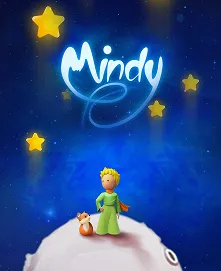
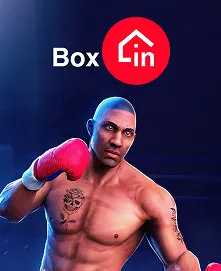
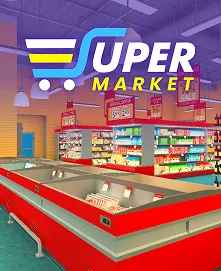
TThe most useful examples are not always the ones with the most badges or leaderboards. They are the ones where progression, rewards, challenges, or feedback make the next action clearer and give users a reason to continue.
See selected work where those systems play a meaningful role in the wider experience.

BEFORE DEVELOPMENT
FOUR QUESTIONS TO SETTLE
BEFORE GAMIFICATION GOES LIVE
Rewards and progression can change more than the interface. They influence behavior, incentives, data, and sometimes even the economics of a product. These questions are worth answering before anyone starts building.
Could Gamification Feel Forced Here?
Absolutely. A leaderboard inside the wrong product can feel ridiculous, and a reward for every minor action quickly loses meaning. The mechanics, language, feedback, and visual treatment should suit the audience and the context they are already in.
How Do We Prevent Users Exploiting It?
If there is a shortcut, someone will eventually find it. Eligibility rules, repeat-action limits, validation, redemption conditions, and other safeguards need to be considered alongside the mechanic itself—especially when points or rewards carry real value.
What Has to Change in the Existing Product?
Often, less than expected. Accounts, APIs, CRM or LMS data, content, analytics, and backend logic are reviewed first so the new layer can reuse what already works and isolate the areas that genuinely need development.
What Will Tell Us It Is Working?
That depends on the behavior the system was meant to influence. A training product may care about completion. A loyalty program may care about repeat activity or reward use. Progression, participation, and drop-off should be measured against the original reason for adding gamification in the first place.
HOW WE CAN JOIN THE PROJECT
THREE WAYS TO TAKE
ON THE WORK
Not every product needs the same level of outside support. The work can begin with a complete build, a clearly defined module, or an ongoing role after launch.
01
STARTING FROM THE GROUND UP
FULL-CYCLE
BUILD
Best when the gamified experience needs to behave as one connected system from day one. Planning, UX, development, backend logic, integrations, testing, and release move forward as one coordinated scope rather than a series of disconnected features.
PLAN THE BUILD02
ADDING TO AN EXISTING PRODUCT
YMODULES
& INTEGRATIONS
The rest of the product does not need to be rebuilt just because one layer is missing. Rewards, progression, leaderboards, loyalty logic, LMS connectivity, analytics, or another defined module can be scoped around the technical boundaries already in place.
SCOPE THE MODULE03
PLANNING FOR CONTINUOUS CHANGE
ONGOING
PRODUCT SUPPORT
Gamification rarely stays frozen after launch. Challenge difficulty changes. Rewards lose their pull. Campaigns come and go. New behavior patterns appear. Ongoing support keeps the system useful as the product and its users change.
SET UP ONGOING SUPPORTPROJECT SCOPING
HOW MUCH DOES
GAMIFICATION DEVELOPMENT COST?
There is no useful single price for “gamification.” Adding one leaderboard to an existing product is a different job from building a loyalty platform with customer data, redemption rules, admin tools, and external integrations.
The ranges below are planning estimates. Final pricing should follow a review of the product, technical dependencies, and intended scope.
Focused Gamification Module
20K-35K
Points, badges, streaks, challenges, or leaderboards added to an existing product.
6 - 10 Weeks
Typical Timeline
Multi-Mechanic Product Layer
30K-60K
Connected progression, rewards, achievements, challenges, and supporting user flows.
2 - 4 months
Typical Timeline
Learning & Training System
40K-80K
Progress tracking, assessments, milestones, recognition, reporting, and LMS integration.
3 - 5 months
Typical Timeline
Loyalty & Rewards Platform
40K-100K
Points, tiers, redemption rules, campaigns, customer data, analytics, and external integrations.
4 - 7 months
Typical Timeline
Enterprise Gamification System
75K-200K+
Custom rules, multiple user roles, administration, analytics, integrations, and higher-scale architecture.
6 - 12+ months
Typical Timeline
Frequently Asked Questions
If an existing platform already supports the mechanics, integrations, and rules you need, using it may be the better decision.
Custom development becomes more useful when progression, rewards, user roles, data flows, or business rules are specific to the product. Both routes can be reviewed during scoping; there is little value in building custom software where configuration already solves the problem.
A polished specification is not necessary. Start with the product, the audience, and the behavior you want to encourage.
Existing user flows, technical documentation, APIs, CRM or LMS dependencies, authentication, analytics, and known constraints help us understand how much of the work is new and how much needs to connect with what is already there.
Yes. A pilot might test one journey, one audience, or a small group of mechanics before the wider rollout.
For example, a training platform could test progression and completion feedback within a single course instead of redesigning the entire learning experience at once. The pilot can expose behavioral and technical problems while the cost of changing direction is still relatively low.
Ownership is defined in writing before development begins. The agreement can specify which source code, documentation, designs, and project assets are handed over as part of the custom build.
Third-party libraries, licensed tools, and external services remain subject to their own licensing terms and should be identified separately.
Yes. We can sign your NDA or provide ours before confidential requirements, product details, internal workflows, technical documentation, or unreleased concepts are shared.
A reward worth money cannot be protected only by what happens on screen.
Server-side validation, permissions, eligibility rules, transaction records, redemption limits, rate controls, and checks for unusual activity may all be relevant. The safeguards depend on whether users can simply earn points, or also transfer, redeem, purchase, or otherwise exchange them.
Not if the additional workload is planned properly.
Real-time calculations, event volume, data synchronization, external APIs, and database activity are reviewed before integration. Depending on the architecture, caching, asynchronous processing, database planning, API design, and load testing can keep the new layer from becoming a bottleneck.
Yes, when those controls are included in the scope.
An admin interface can let authorized teams change challenge dates, reward values, campaign rules, eligibility, content, or selected configuration without waiting for a code release. More structural changes may still need engineering support, and that boundary should be clear before handover.
YOU DON’T NEED THE
FULL GAMIFICATION PLAN
Get a reply within 24 hours
Tell us where the project stands today. We'll start there.


 Book An Appointment
 WhatsApp