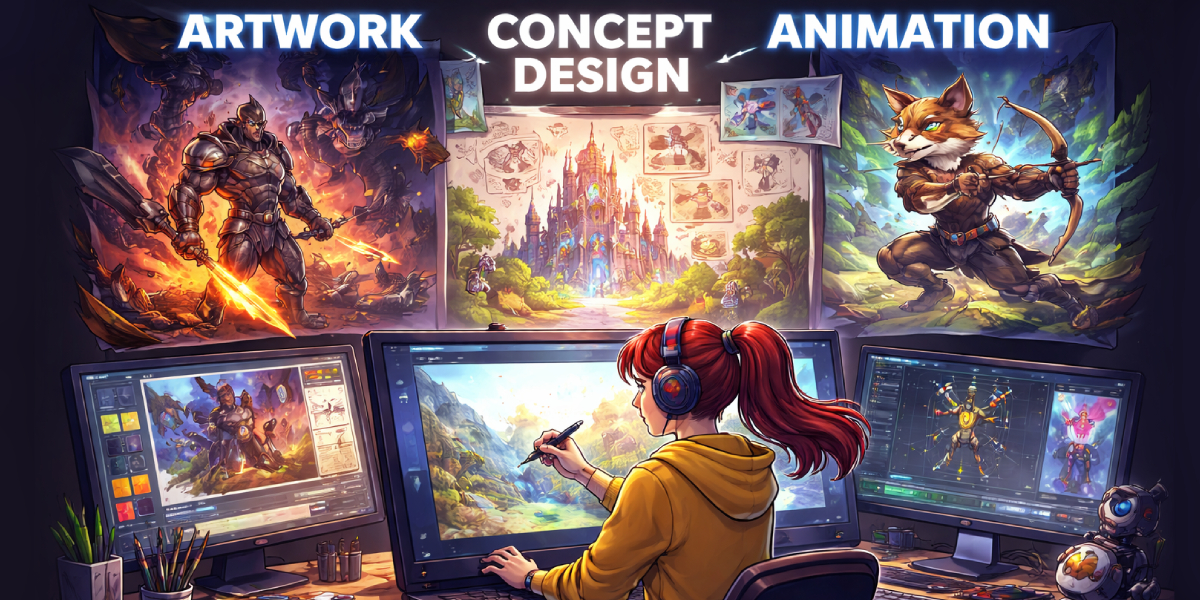
In game development, visual execution is not decoration; it is a functional system that shapes player perception, usability, and emotional engagement. Artwork, animation, and concept design are not isolated creative outputs; they are interconnected layers that influence how a game is understood, played, and remembered.
As a game development company working with diverse studios and publishers, Red Apple Technologies approaches game art & animation services as production-critical capabilities, aligned closely with gameplay mechanics, technical constraints, and long-term scalability.
Concept Design: Establishing Visual Direction Early
Concept design is the earliest visual stage of a game, but also one of the most strategically important. It defines the visual foundation upon which all future production depends.
For many studios, especially those seeking concept design for game studios, this phase determines how effectively ideas translate into playable systems. Rather than focusing on standalone illustrations, the objective is to establish a consistent visual language—covering characters, environments, props, and interfaces.
Concept design workflows typically include:
- Character concepts with clear silhouettes and functional readability
- Environment and world-building concepts tied to gameplay flow
- Props and interactive elements designed for reuse and scalability
- Visual references that guide downstream production
By grounding visual decisions early, teams reduce creative ambiguity and minimize costly rework during asset production.
Game Artwork: Assets Built for Production Reality
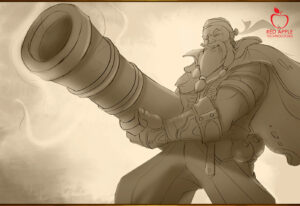
High-quality artwork must perform under real-world conditions. Assets that look impressive in isolation but fail under performance constraints ultimately compromise player experience.
As a game art outsourcing company supporting different platforms, Red Apple Technologies develops artwork with production readiness in mind. Art teams collaborate closely with engineers to ensure assets are optimized for:
- Mobile, web, PC, and cross-platform builds
- Memory and rendering constraints
- Reusability across levels and content updates
- Future LiveOps scalability
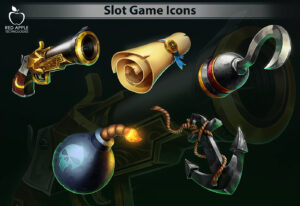
Artwork production spans both 2D and 3D pipelines, depending on project requirements. This includes characters, environments, UI elements, icons, and in-game effects, created to integrate seamlessly with engines and gameplay logic.
Character Design: Balancing Identity and Function
Characters are often the most visible representation of a game’s identity. Their design directly influences player connection, recognition, and long-term engagement.
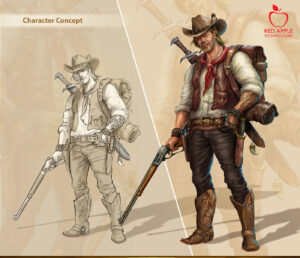
Character design is approached from both creative and technical perspectives. Visual identity, animation readiness, and gameplay readability are considered together, especially important for studios looking to hire game artists & animators as part of extended development teams.
The process includes:
- Iterative sketches and silhouette exploration
- Expression and pose studies for emotional range
- Modular design systems for customization or progression
- Rigging-friendly structures to support animation pipelines
This approach ensures characters can evolve over time without breaking visual or technical consistency.
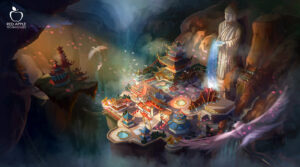
Environment & Level Art: Visual Design That Supports Gameplay
Environment art plays a critical role in how players navigate and understand game spaces.
Rather than focusing on visual density alone, environment and level art are designed to:
- Guide player movement intuitively
- Reinforce objectives and mechanics
- Maintain clarity under gameplay conditions
- Scale effectively across devices
This balance ensures that environments enhance immersion while supporting gameplay performance.
UI & UX Visual Design: Function-First Aesthetics
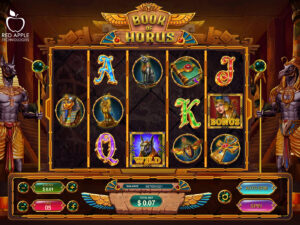
User interface design sits at the intersection of visual clarity and usability. In games, UI artwork must communicate information instantly while remaining visually cohesive with the game world.
UI and UX visual design focuses on:
- Clear hierarchy and readability
- Responsive layouts across screen sizes
- Visual feedback for player actions
- Consistent iconography and interaction cues
Animations and transitions are used sparingly and purposefully to guide attention and improve flow rather than distract from gameplay.
Animation: Translating Design Into Motion
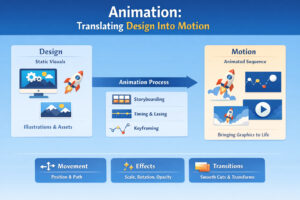
Animation is where static assets become interactive systems. It communicates intent, feedback, and emotion in ways that static visuals cannot.
Within broader game art & animation services, animation is treated as a gameplay component rather than a decorative layer. Animation supports:
- Character movement and combat systems
- Environmental interactions
- UI transitions and micro-interactions
- Feedback loops for player actions
Timing, responsiveness, and consistency are prioritized to ensure animations enhance player control and understanding.
Animation Pipelines and Technical Integration
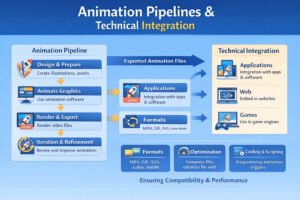
Effective animation requires close coordination between artists and engineers.
Animation pipelines are designed to:
- Align with engine-specific constraints
- Maintain performance across target platforms
- Support iteration without breaking gameplay systems
- Enable reuse for LiveOps content
Rigging strategies, state mechanics, and blending systems are planned early to avoid bottlenecks later in development.
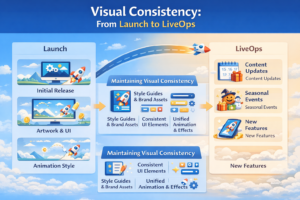
Visual Consistency From Launch to LiveOps
Visual production does not end at launch.
For long-running titles, artwork and animation systems must support:
- Seasonal events and content drops
- New characters or environments
- Feature expansions without visual drift
By designing scalable pipelines, studios avoid inconsistencies that often appear when content is added post-launch.
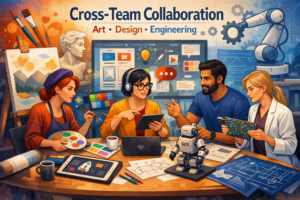
Cross-Team Collaboration: Art, Design, and Engineering
One of the most common challenges in game development is misalignment between creative and technical teams.
As a game development company offering integrated services, Red Apple Technologies emphasizes structured collaboration between art, design, and engineering. Shared documentation, regular reviews, and iterative validation help ensure that visual assets function as intended within gameplay systems.
This alignment reduces friction and improves production velocity without compromising quality.
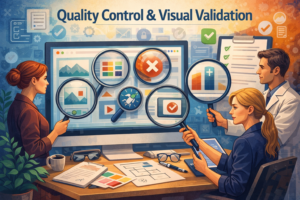
Quality Control and Visual Validation
Visual quality is evaluated not just on aesthetics, but on effectiveness in live gameplay environments.
Quality checks include:
- Asset performance testing
- Visual clarity during active gameplay
- Cross-device and resolution consistency
- Engine-level integration testing
This ensures that visual assets remain reliable across different player scenarios.
The Takeaway
Artwork, animation, and concept design are not surface-level enhancements; they are foundational systems that influence gameplay, scalability, and long-term engagement.
For studios exploring external support, whether through a game art outsourcing company or by choosing to hire game artists & animators as an extension of their team, the focus should always be on process maturity, technical alignment, and production scalability.
At Red Apple Technologies, visual production is treated as a system that evolves alongside the game itself (from early concept design to ongoing LiveOps support), ensuring consistency, reliability, and meaningful player experiences throughout the product lifecycle.
To Have A Better Understanding On This Let us Answer The Following Questions
Answer: Look for a provider that demonstrates production-ready pipelines, engine compatibility, and cross-team collaboration. Beyond visual quality, a reliable game art & animation services partner should understand performance constraints, iteration workflows, and long-term content scalability.
Answer: This depends on the project scope and timeline. Many studios work with a game art outsourcing company to access specialized skills quickly, reduce overhead, and scale production efficiently, especially for character art, environments, or animation-heavy features.
Answer: Concept design establishes the visual foundation for all future production. Strong concept design for game studios helps align creative direction, reduce rework during asset creation, and ensure consistency across characters, environments, and UI throughout the development lifecycle.
Answer: Yes. Many studios choose to hire game artists & animators through structured engagement models where external teams integrate with in-house designers, developers, and producers. This approach supports collaboration while maintaining creative control.
Answer: Technical alignment is critical. A game development company with mature art pipelines will validate assets inside the target engine, optimize for performance, and test visuals under real gameplay conditions rather than reviewing them only in isolation.
Answer: Studios commonly outsource concept art, character and environment art, UI assets, 2D/3D animation, and LiveOps content. The key is ensuring that outsourced assets are built to integrate seamlessly into existing production pipelines.
Answer: Animation directly influences responsiveness, feedback, and clarity. Well-integrated animation systems support gameplay mechanics, communicate player actions clearly, and improve overall game feel across interactions and UI elements.
Answer: Ideally, visual teams should be involved from the concept and pre-production stages. Early collaboration allows artwork, animation, and engineering teams to align on constraints, pipelines, and scalability before full production begins.
Answer: Yes, if designed correctly. Scalable pipelines enable studios to add new characters, environments, or seasonal content during LiveOps without compromising visual consistency or performance.
Answer: Evaluation should include reviewing production workflows, engine integration experiences, communication practices, and long-term support capabilities; not just visual portfolios. This ensures the partner can support both launch and ongoing development needs.


 Book an Appointment
 Get Instant Project Estimation
 WhatsApp Now
 Select Files From Your


 Book An Appointment
 WhatsApp