Why Mobile Game Services Should Support Cloud Save & Cross-Device Sync
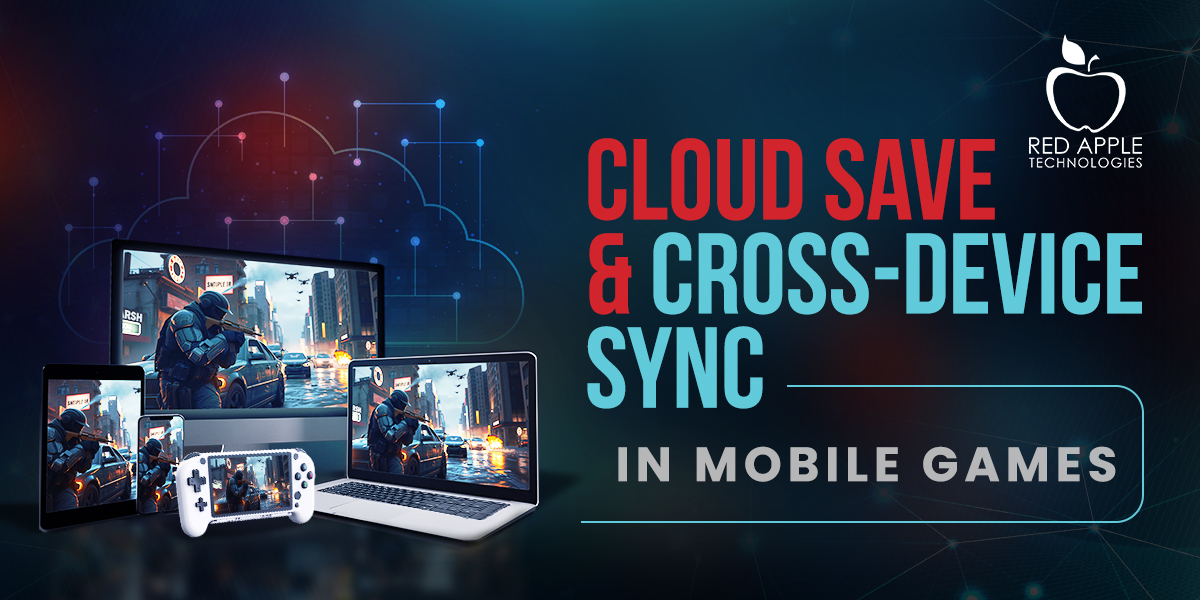
The mobile gaming industry is no longer just about entertainment; it has become a multi-billion-dollar ecosystem that powers businesses, creators, and entire esports communities. With billions of active players worldwide, developers are constantly competing to keep players engaged for longer.While graphics, gameplay mechanics, and monetization models play a huge role, one factor often gets overlooked: player convenience. And at the heart of convenience are two must-have features: cloud save and cross-device sync.
Modern players expect their games to be available anytime, anywhere, across multiple devices. That’s why mobile game development services need to prioritize these features—not as an add-on, but as a core part of the gaming experience.
The Modern Mobile Gamer Is Cross-Device
The way people play mobile games has shifted drastically. Today’s mobile gamer does not live on a single device. The average player uses multiple screens daily—smartphones, tablets, laptops, smart TVs, and even wearables. Gaming has followed this trend, moving beyond being “mobile-only” to being part of a larger cross-device lifestyle.
Picture this:
- A player starts a level on their smartphone while commuting.
- They come home, open their tablet, and want to continue right where they left off.
- Later, they log in on a smart TV or PC to enjoy the same game on a bigger screen.
Without a cloud save system, this continuity breaks. Players risk losing progress, in-app purchases, and achievements, leading to frustration and churn. This is where mobile game services with cloud integration step in, ensuring that no matter the device, the game feels seamless and uninterrupted.
Why Cloud Save & Cross-Device Sync Matter
Enhanced Player Experience
Gamers hate nothing more than losing saved progress after a device crash, reset, or game uninstall. With cloud integration for mobile games, player data is securely stored online, eliminating this risk. Cross-device sync ensures the game picks up exactly where it left off, no matter the platform.
This isn’t just a convenience; it’s an expectation.
Future-Proofing Against Device Upgrades
The average consumer upgrades their phone every 2-3 years. Without cloud syncing, each upgrade risks wiping out game progress, pushing players to abandon the title altogether. With mobile game development services that offer syncing, players can seamlessly continue their journey, making your game part of their long-term digital lifestyle.
Boosting Retention & Monetization
Retention is the holy grail of mobile gaming. Players who sticks around longer are ar more likely to:
- Make in-app purchases
- Subscribe to premium plans
- Engage with ads
By reducing the frustration of lost progress, cloud save and cross-device sync in mobile games directly translate into higher lifetime value (LTV).
Competitive Differentiator
In an oversaturated market, features like mobile game services with cloud integration act as unique selling points. Games that protect a player’s time and effort win loyalty. Word-of-mouth referrals are stronger when a game “just works” across devices.
Multi-Platform Gaming Ecosystem
Cross-platform play is becoming the norm, with many titles connecting mobile, PC, and console gamers. Cloud save and syncing are the backbone of this ecosystem, making it possible for a player to log in from any device without losing immersion.
Challenges Developers Face
Implementing cloud save and sync is not without hurdles, and game developers must balance functionality with scalability and security. Key challenges include:
- Server Costs: Secure storage requires robust infrastructure and ongoing maintenance.
- Data Privacy & Security: Compliance with GDPR, COPPA, and India’s Digital Personal Data Protection Act (DPDPA 2023) is mandatory to safeguard sensitive player information.
- Offline Accessibility: Developers must design hybrid systems that allow offline play while syncing progress once the device reconnects.
- Cross-Platform Consistency: Keeping data aligned across multiple operating systems and platforms requires rigorous testing and continuous updates.
Despite these challenges, the long-term ROI far outweighs the costs.
How Red Apple Technologies Help
This is where our mobile game development services add value. By integrating cloud systems from the very beginning of development, we help publishers avoid costly retrofits later.
Key contributions include:
- Architecting scalable cloud solutions for millions of users
- Ensuring compliance with international data laws
- Designing hybrid systems that work online and offline
- Integrating analytics to track player behavior across devices
Final Thoughts
In today’s crowded gaming market, cloud save and cross-device sync in mobile games are no longer optional; they’re essential for survival. Players expect their progress, purchases, and achievements to be safe, portable, and always accessible.
For developers and publishers, the benefits are clear: higher retention, stronger monetization, and a competitive edge in a marketplace that rewards convenience.
The takeaway is simple: If you’re building or upgrading a game, treat cloud save and syncing as pillars of your mobile game services. The studios that embrace this shift will be the ones that thrive in the next decade of mobile gaming.
To Have A Better Understanding On This Let us Answer The Following Questions
How do cloud save and cross-device sync impact user acquisition strategies?
Answer: Cloud save and sync don’t just improve retention but also strengthen acquisition. Games that promise continuity across devices are more appealing to new players, especially in regions where device switching is frequent. Highlighting these features in marketing campaigns can directly boost install rates.
What role does cloud integration play in esports and competitive mobile gaming?
Answer: In esports, even small interruptions can ruin the player experience. Cloud saves ensure match histories, rankings, and achievements are always preserved. Cross-device sync allows competitive gamers to practice and compete on multiple devices seamlessly, enabling mobile titles to scale into professional esports ecosystems.
Can cloud save systems help monetize beyond in-app purchases?
Answer: Developers can unlock new monetization streams such as:
- Cross-device subscription models (premium cloud sync access)
- Personalized ads powered by data collected across devices
- Season passes where progress continuity makes players more likely to invest
This widens revenue opportunities beyond traditional in-app purchases.
How do mobile game developers ensure security in cloud save systems?
Answer: Developers must integrate:
- End-to-end encryption for data transfers
- Compliance with GDPR, COPPA, and regional privacy laws (e.g., India’s DPDPA 2023)
- Role-based access control to prevent unauthorized entry
- Regular server audits and penetration testing
Security-first design builds player trust, which directly impacts retention and monetization.
What’s the ROI for publishers who invest in cloud save and sync early?
Answer: While setup costs are higher upfront, publishers save significantly by avoiding costly retrofits later. More importantly:
- Retention rates rise due to reduced frustration
- Lifetime Value (LTV) increases with continued purchases
- Churn rates decline, lowering customer acquisition costs (CAC)
Over a 2–3 year cycle, ROI from cloud save often surpasses the initial investment.
How does cross-device sync affect global markets with high device turnover?
Answer: In emerging markets like India, Indonesia, and Brazil, consumers frequently upgrade or switch devices due to affordability. Without cloud sync, players abandon games during upgrades. With it, games become part of long-term digital lifestyles, giving publishers a stronger foothold in high-growth markets.
What are hybrid cloud solutions, and why are they critical for mobile games?
Answer: Hybrid solutions allow players to continue gaming offline, then sync progress automatically when online. This is vital in regions with inconsistent internet connectivity. Hybrid models strike a balance between convenience, accessibility, and reliability, making them a must-have in mobile-first economies.
How can game studios future-proof with cloud save as gaming shifts to AR/VR?
Answer: As AR/VR gaming becomes mainstream, cross-device continuity will expand from phones and tablets to headsets, wearables, and mixed-reality devices. By embedding scalable cloud infrastructure now, studios position themselves to easily adapt and deliver seamless experiences across next-gen devices.
Get Started
- End-to-End Game & App Development Services
- Flexible Business Models – Project Based or Dedicated Hiring
- 13+ Years of Industry Experience with Global Clientele
- Globally Recognized by Clutch, GoodFirms & DesignRush
Related Blogs
Discover more stories & insights that inspire

Modern game development is no longer limited by creative ambition; it is shaped by infrastructure decisions. From multiplayer stability and global latency to LiveOps flexibility and cost control, cloud infrastructure...
The mobile gaming industry is no longer just about entertainment; it has become a multi-billion-dollar ecosystem that powers businesses, creators, and entire esports communities. With billions of active players worldwide,...
Undoubtedly, mobile devices have made online games more accessible and user-friendly. However, it has also given rise to challenges, such as storage space constraints, inconsistent app sizes, and increased server...
Gaming hardware has increased in variety over the decades, and players have been showing great interest in experiencing their favorite games across different platforms and screen sizes. It has given...
Like other game genres, strategy-based games are also attracting a considerable user segment over time. Especially in countries like the USA, South Korea, Japan, and the UK, 65 to 69...
Innovations in the video game industry have found a pivotal medium with cloud technology. This is allowing enterprises to fulfill the on-demand gaming choices of players with unique game ideas....
Opportunities in the video game industry are steadily rising with the arrival of next-gen technologies like Blockchain, NFT, Metaverse, IoT, AR/VR, and so on. These technology innovations are encouraging various...


 Book An Appointment
 WhatsApp